
Sony's Ace Robot: A Revolution in Table Tennis
Discover how Sony's Ace robot reached a historic milestone in table tennis, challenging and beating top-level human players.
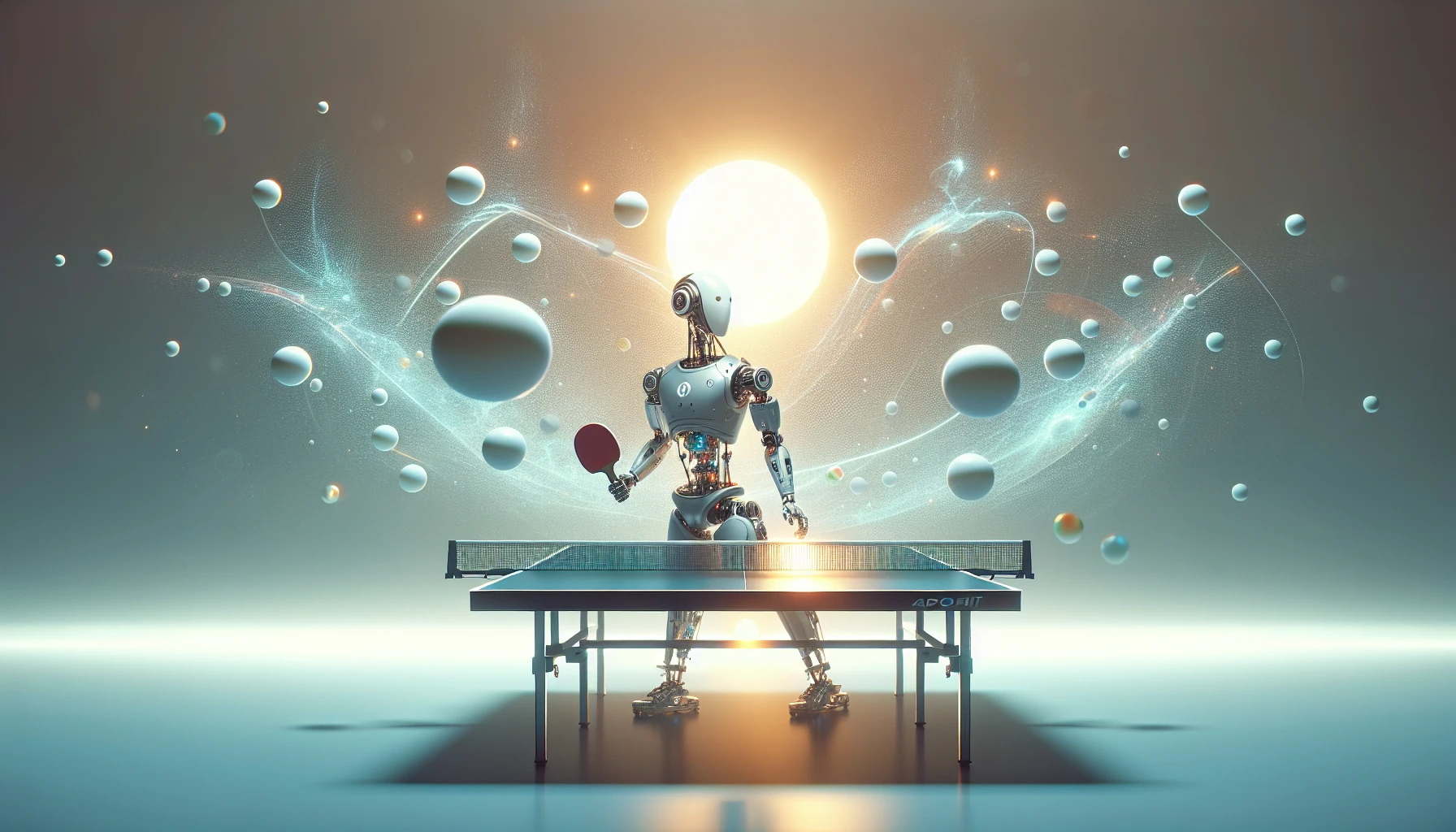
The world of robotics has recently seen a significant advance with the introduction of Ace, an autonomous robot developed by Sony's AI division. The robot has reached a historic milestone in table tennis, challenging and beating high-level human players. In this article, we explore Ace's innovative features, its performance against professional athletes and the implications of this development for the future of robotics and artificial intelligence.
Technical features of Ace
Ace was designed to tackle the unique challenges of table tennis, a sport that demands precision, speed and adaptability. The robot is equipped with an advanced perception system that includes nine high-speed cameras, able to track the three-dimensional position of the ball and measure its angular velocity and spin in real time. This system allows Ace to anticipate and respond effectively to rallies with its opponents. In addition, the robot uses a control algorithm based on reinforcement learning, which allows it to adapt dynamically to different game situations and continuously improve its performance. Its mechanical structure is designed to perform fast and precise movements, emulating the abilities of an expert human player.
Performance against professional players
During a series of official matches, Ace demonstrated its ability to compete with high-level players. In particular, it won three of five matches against elite players, highlighting its ability to adapt and respond effectively to human playing styles. Although it did not prevail against professional players on every occasion, its performance marked a significant step towards integrating AI into real sporting contexts. This success not only underlines Ace's potential in table tennis, but also paves the way for future applications of AI in other sports and fields that require rapid decisions and precision.
Implications for the future of robotics and artificial intelligence
Ace's success is a milestone in the development of autonomous robots capable of interacting effectively with the physical environment and with humans. The technologies used in Ace, such as reinforcement learning and advanced perception systems, could be applied across a wide range of sectors, from industrial manufacturing to healthcare, improving efficiency and safety. Moreover, Ace's ability to adapt to unpredictable situations and learn from interactions with humans could lead to significant developments in human-robot interaction, making these technologies more accessible and useful in everyday life.
Conclusion
Sony's Ace robot has marked a historic milestone in robotics and artificial intelligence, demonstrating the ability of an autonomous robot to compete successfully against high-level human players in table tennis. Its advanced technical features and performance against professional athletes highlight the potential of AI to improve and innovate across various sectors. As technology continues to advance, we are likely to see further developments in this field, with increasingly sophisticated applications integrated into our daily lives.
- Technological innovation: Ace represents a significant advance in the capabilities of autonomous robots, combining advanced perception systems and control algorithms based on reinforcement learning.
- Future applications: The technologies developed for Ace could be applied across various sectors, improving efficiency and human-robot interaction in real-world settings.
- Implications for sport: Ace's success in table tennis paves the way for the use of AI in other sports, offering new opportunities for training and competition.
- Human-robot interaction: Ace's adaptation and learning abilities could improve interaction between humans and robots, making these technologies more accessible and useful in everyday life.
- Development outlook: As technology continues to advance, we are likely to see further developments in robotics and AI, with increasingly sophisticated applications integrated into our daily lives.


