
Isaac Asimov Critiques Orwell's '1984': A 1980 Review
Isaac Asimov critiques Orwell's dystopian vision in '1984', highlighting the gaps between reality and its futuristic predictions.
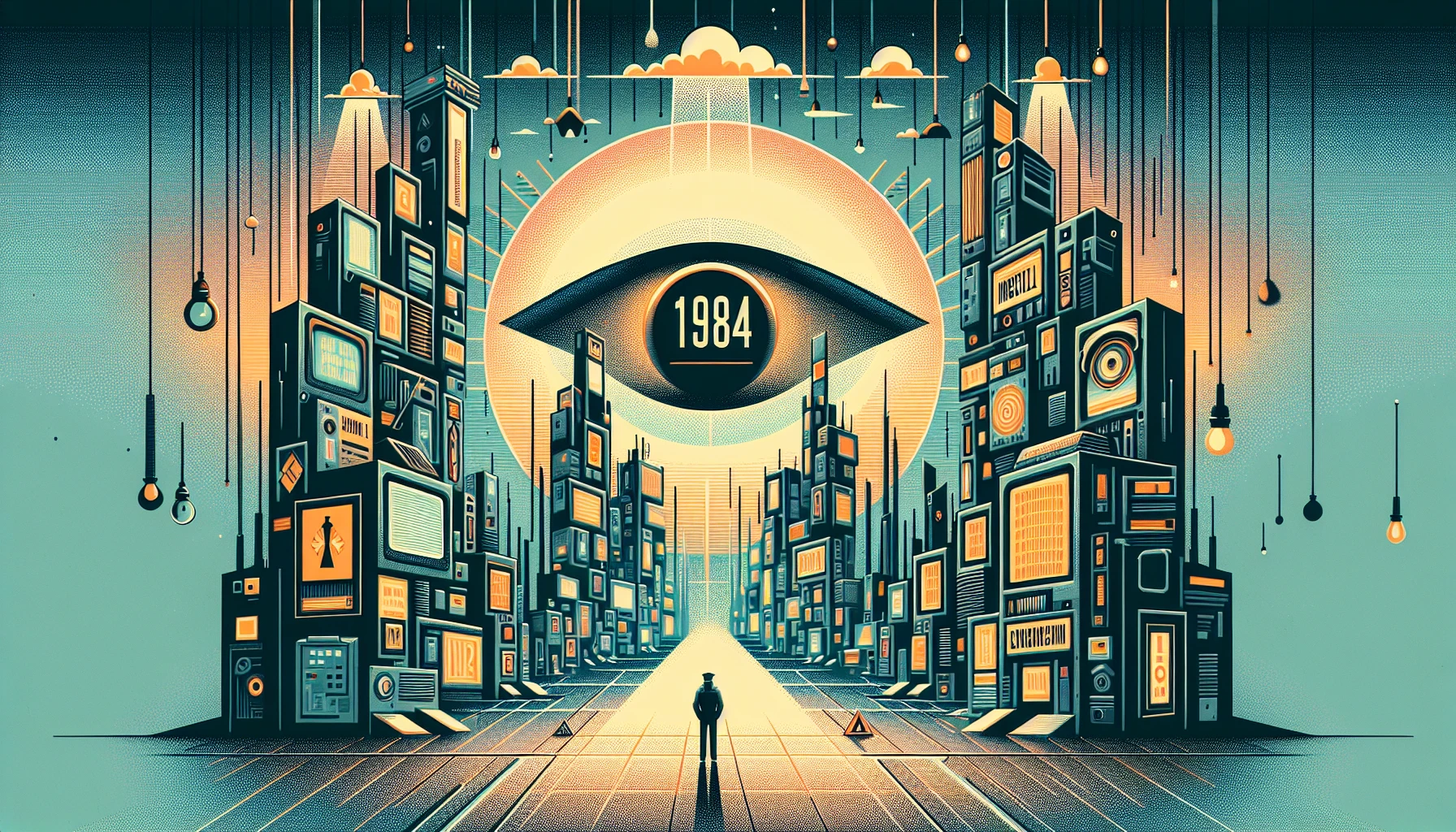
In 1980, Isaac Asimov published a critical review of George Orwell's novel "1984", offering a unique perspective on the dystopia Orwell imagined. Asimov, known for his sharp analysis and scientific approach, questioned the plausibility of the technological and political predictions presented in the book.
Asimov's Critique of Orwell's Technological Prediction
Asimov pointed out that the society described in "1984" was characterized by constant human surveillance, a system that, in his view, would have been inefficient and unsustainable. He suggested that Orwell should have foreseen the use of advanced technologies, such as computers, for mass surveillance, a vision more in line with the technological trends of the 1980s.
Orwell's Political and Social Vision According to Asimov
From a political standpoint, Asimov criticized Orwell's portrayal of a static and ineffective totalitarianism. According to Asimov, the society described in the novel did not reflect real political dynamics, which were constantly evolving and shaped by complex economic and social factors. Asimov also noted that Orwell seemed to focus excessively on criticizing Soviet communism, neglecting other forms of political oppression.
Implications for Science Fiction Literature
Asimov's review sparked debate among readers and scholars. Some appreciated his detailed analysis, while others felt that Asimov had misunderstood Orwell's intent, which was not to make an accurate prediction of the future, but to explore the potential consequences of absolute power. This debate highlights the different interpretations and the importance of placing literary works within their historical and cultural context.
Conclusion
Isaac Asimov's review of "1984" offers a critical perspective that invites readers to reflect on the technological and political predictions in science fiction literature. It stimulates a broader discussion on how literary works can influence and reflect social and political perceptions, and on how technology can shape our visions of the future.
- Critical analysis: Asimov questions the plausibility of Orwell's technological predictions.
- Political perspective: He criticizes the portrayal of a static and ineffective totalitarianism.
- Literary implications: The review fuels debate about the interpretation and context of literary works.


