
Healthcare Digital Twins: Synthetic Data and AI in Medicine
Digital twins of the human body promise to fill gaps in clinical data with synthetic models, physics-based simulation and predictive analysis.
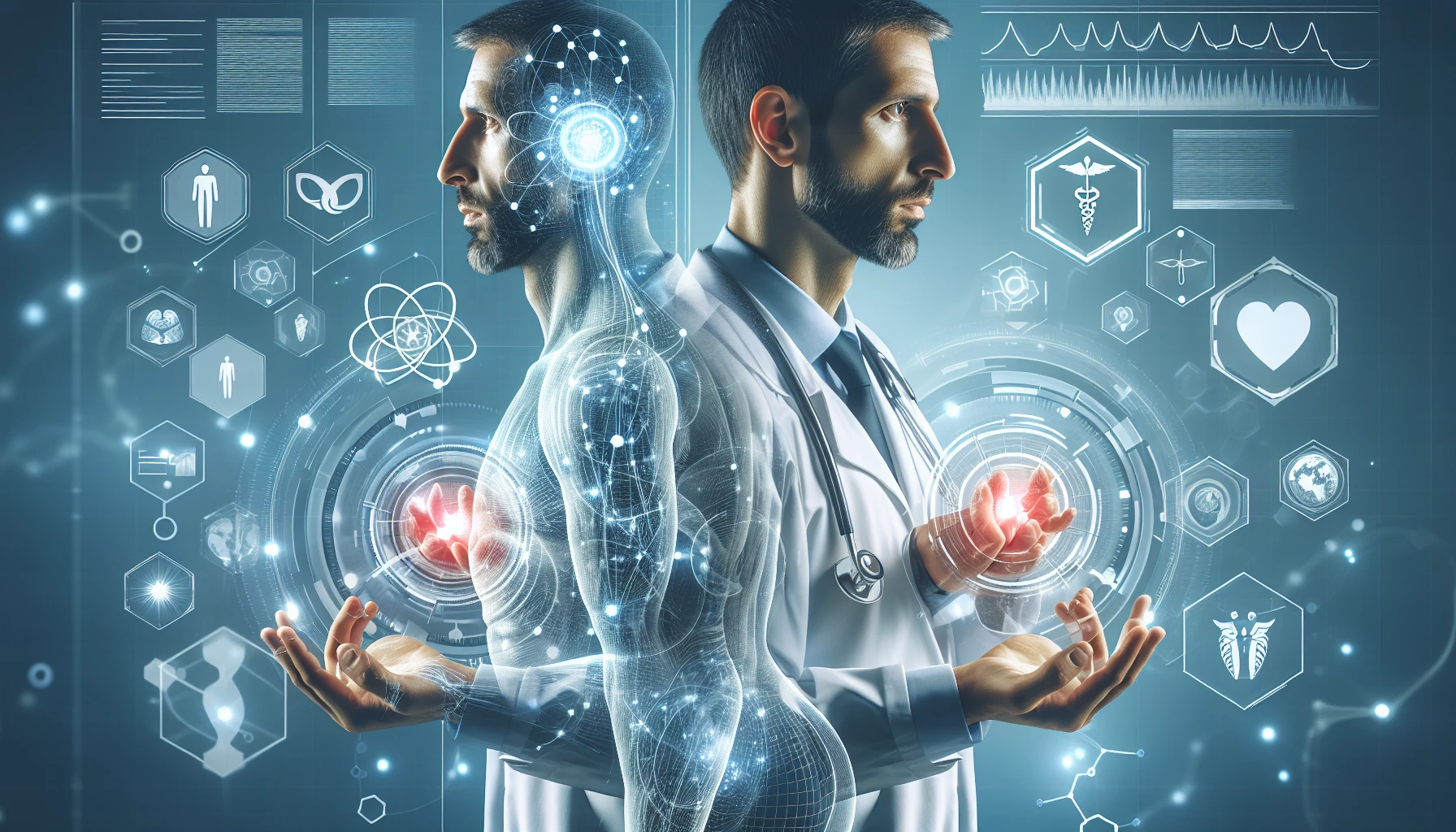
Healthcare companies have a structural problem: the data useful for training models, validating algorithms and simulating clinical scenarios is often fragmented, incomplete or hard to share. This limitation weighs even more heavily in rare cases, atypical conditions and contexts where privacy and regulation restrict access to real datasets.
An emerging solution aims to create synthetic representations of the human body, capable of mimicking structure, function and behaviour. The goal is not to replace clinical data, but to fill informational gaps with physical and predictive models that make more robust analyses and safer experimentation possible.
From fragmented data to the synthetic model
The value of this approach lies in the ability to unify very different sources: medical imaging, biometric sensors, training logs, clinical records, technical texts and other operational traces. An orchestration system based on language models can detect inconsistencies, normalise inputs and build synthetic datasets consistent with the biological context.
These datasets become the basis for creating digital twins of the human body, that is, virtual entities that simulate anatomy, physiology and response to change. In practice, the move is from collections of misaligned data to a simulation environment that enables predictions, comparisons and tests in a more controlled way.
Why the physical layer is decisive
A reliable digital twin cannot be limited to generating statistical correlations. A physical layer able to constrain the model is needed, avoiding outputs that are plausible but biologically weak. A physics engine helps maintain coherence among variables and respect the rules governing movement, load, posture and other bodily dynamics.
This approach is particularly useful when real data does not exist or is too scarce to be representative. If, for example, an adequate sample is missing for a specific anatomical configuration, the system can reconstruct plausible scenarios by varying structural parameters and observing how overall behaviour changes.
Use cases: healthcare, research and sport
The potential applications are numerous. In clinical settings, digital twins can support the design of procedures, the simulation of interventions and the assessment of treatment response. In pharmaceutical research, they can help interpret heterogeneous data better and read weak signals in trials.
Professional sport is also fertile ground, because it produces continuous high-frequency data flows: jumps, loads, recovery, sleep, mobility and training intensity. By cross-referencing these variables, a model can estimate injury risk, performance decline or the impact of specific workloads.
Implications for those deciding investments and priorities
For decision makers, the issue is not only technological innovation, but the possibility of turning a data availability problem into a competitive advantage. Platforms that combine synthesis, simulation and validation can shorten research times, improve analysis quality and open new data-driven products.
Three issues remain to be watched closely, however: model reliability, source quality and data governance. Without solid controls, the risk is producing convincing simulations that are not trustworthy enough to support high-impact decisions.
In short, digital twins applied to the human body are becoming a strategic tool to overcome the limits of traditional clinical datasets.
- They integrate heterogeneous sources and fill informational gaps.
- They work better when anchored to realistic physical constraints.
- They open use cases in clinical practice, research and performance analysis.
- They require rigorous governance to avoid decision-making errors.


