Export AI Chip: What Changes After the Nvidia Case
The Nvidia case accelerates the US crackdown on AI chips: more controls, more licenses, and increased pressure on companies and cloud providers.
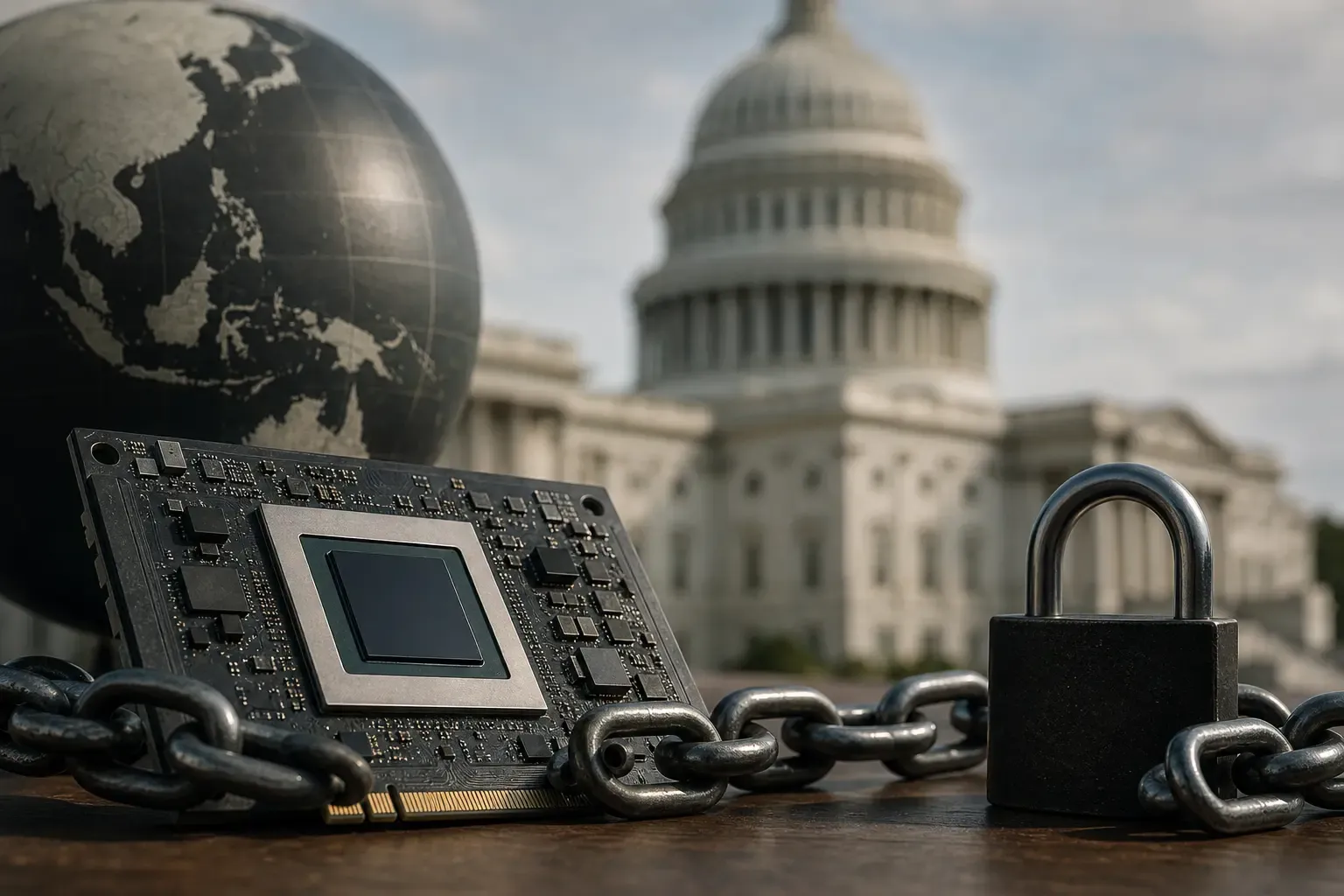
The Nvidia affair is not only fueling a political case: it is becoming a regulatory accelerator. In the United States, the debate on the export of chips for artificial intelligence has quickly shifted from intentions to concrete measures, with new restrictions affecting not only direct sales to China but also indirect channels and transfers via foreign data centers.
For technology companies, the message is clear: when AI hardware becomes a strategic asset, the supply chain is no longer just an operational issue. It becomes a matter of national security, trade compliance, and risk governance.
Why the Crackdown Is So Rapid
Political pressure has grown alongside two factors: allegations of contacts between Nvidia’s leadership and an alleged spy linked to Beijing, and the perception that existing rules still leave room to circumvent bans through intermediary companies, cloud providers, and infrastructures hosted in third countries. The result is a rare convergence: Democrats and Republicans are supporting tougher measures aimed at making it harder for China to access the most advanced chips and strengthening export traceability.
At this stage, the goal is not only to block trade towards a single market. It is to close the loopholes that allow foreign entities to obtain computing power through seemingly legitimate structures, often located in Southeast Asian tech hubs.
What Changes for Vendors, Cloud Providers, and System Integrators
The new measures shift focus to three levels of control. First: the origin and final destination of the chips. Second: the real identity of the customer, including ultimate economic beneficiaries and shell companies. Third: the actual use of computing capacity, especially when provided as a service by data centers outside the United States.
For AI infrastructure providers, this means more due diligence, more documentation, and greater exposure to the risk of blocks, delays, or revocation of authorizations. For integrators and distributors, the risk grows of being caught in longer but also more fragile commercial chains, where a single opaque link can compromise the entire operation.
The most immediate consequence is financial: sales to sensitive markets become less predictable. The strategic consequence is broader: technology groups will have to design their international go-to-market strategies considering not only demand but also the likelihood of sudden regulatory changes.
The Real Issue: Technological Sovereignty and Supply Chain Control
This story shows that AI hardware is no longer treated as a simple high-margin product. It has become an element of geopolitical power, and every link in the supply chain is scrutinized through the lens of security. For European and Italian companies, the signal is twofold: on one hand, the likelihood of further restrictions on sensitive technologies increases; on the other, the importance of having internal processes capable of demonstrating the origin, destination, and use of IT resources grows.
Those who purchase computing power, resell cloud services, or integrate AI solutions for enterprise clients will need to be more selective about partners. Compliance will no longer be a final formality but a condition for market access.
Operational Conclusions
- Restrictions on AI chips are becoming more severe and broader, not only towards China but also along indirect routes.
- Companies will need to strengthen controls over customers, resellers, partners, and the final use of compute capacity.
- The main risk is not only the blocking of sales but regulatory uncertainty that can slow down investments and contracts.
- Those operating in cloud, AI infrastructure, or technology export must immediately update compliance and due diligence measures.
- For the European market, the case confirms that digital sovereignty also passes through control of the hardware supply chain.