
AI Coding Plugins: From Assistant to Business Workflow
Plugins in AI coding tools extend automation beyond development: integrations, governance and workflow standardisation become central.
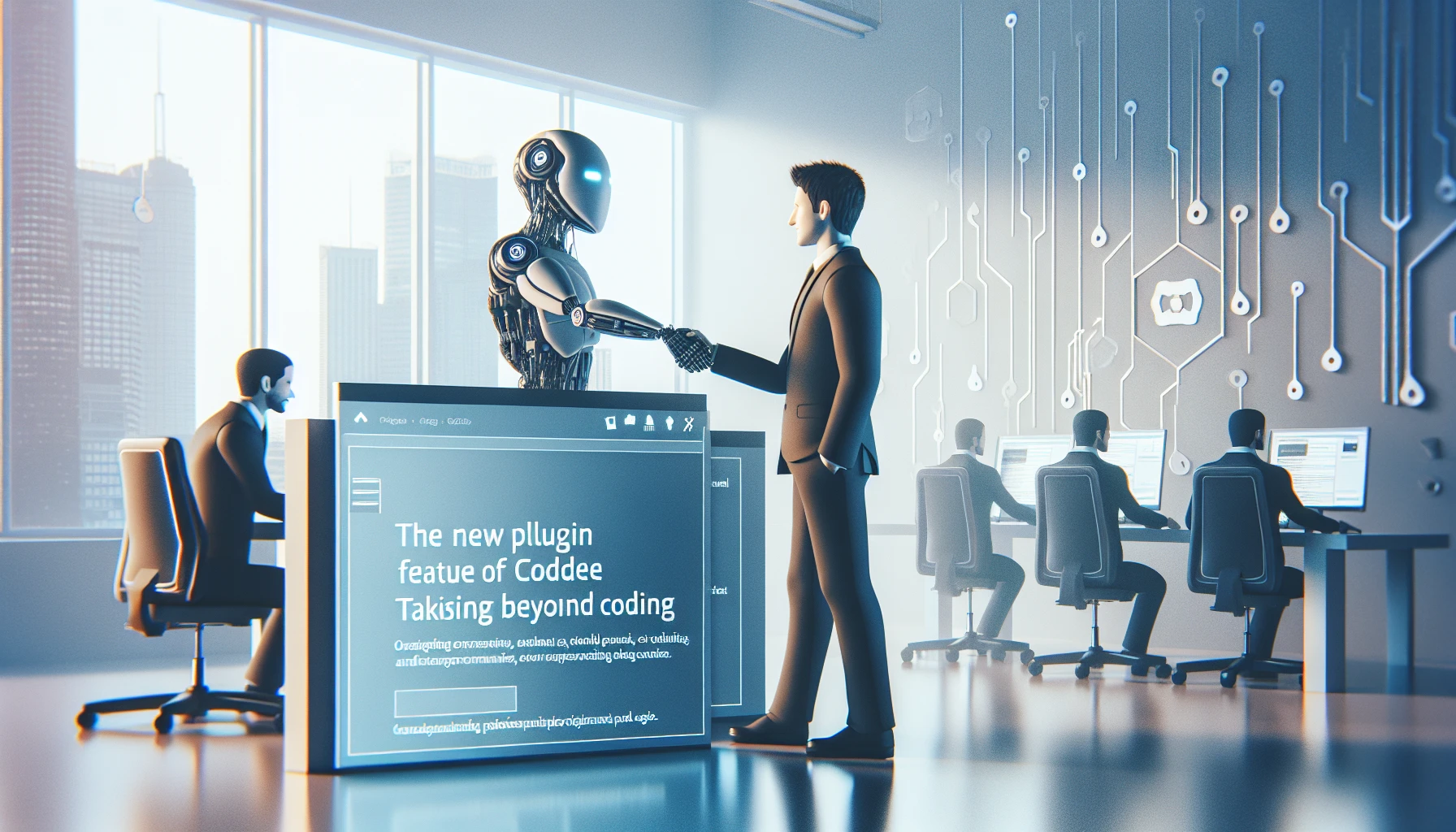
The evolution of AI tools for development is no longer just about writing code. When a programming assistant integrates plugins, it enters the perimeter of business workflows: repositories, email, document storage, operational automation and cloud services. The result is a change of role: from smart editor to orchestration platform.
For technical teams and for those leading digital transformation, the question is not whether this direction is possible, but how quickly it can become a competitive standard. Integrations reduce friction and set-up time, but they also raise issues of governance, security and context management.
From coding assistant to operational hub
An AI coding system with plugins stops being an isolated environment and becomes an access point to external services. This means being able to activate pre-configured workflows, connect data sources and use interoperability protocols to run repeatable activities within an organisation.
In practice, the value lies not only in code generation, but in the ability to coordinate distributed activities: open a ticket, read documentation, query a cloud provider, retrieve a technical specification and prepare a change consistent with the project context.
Why the plugin model matters for companies
The main difference is between manual customisation and scalable distribution. Where custom instructions, technical integrations and manually replicated configurations were once needed, a plugin now makes it simpler to adopt the same setup consistently across several developers or teams.
This has three immediate effects:
- it reduces onboarding time for new tools;
- it standardises internal workflows;
- it favours the adoption of AI processes closer to business needs.
For decision makers, this means being able to treat the AI assistant as a productivity lever, not just an advanced editor.
Impact on governance, security and control
More integrations mean more risk surface. Connecting an AI assistant to external services requires clear rules on permissions, data visibility, auditing and access segregation. The problem is not only technical: it is organisational.
Every plugin can introduce dependencies, inconsistent behaviour and points of failure that must be managed as part of the architecture. In enterprise contexts, precise criteria are needed to decide which integrations to enable, which data to expose and how to monitor the actions performed by the agent.
The real issue: differentiation and maturity of the use case
Integration features are rarely revolutionary in absolute terms. Their strength lies in the experience: simple installation, shared context, immediate use. This is where competition among AI platforms is played out, especially when competitors have already introduced similar solutions.
For companies, the selection criterion should not be “which tool has the most features”, but “which tool integrates best with existing processes, policies and stack”. In other words, competitive advantage comes from the quality of orchestration, not from the number of features.
Operational takeaways
- AI integrations turn a coding tool into a workflow platform.
- Value increases when plugins are distributed and governed in a standard way.
- Security, permissions and auditing become project requirements, not implementation details.
- The choice should be assessed on operational fit, not just on perceived innovation.
- Those who adopt a well-governed AI orchestration model early can accelerate delivery and shared knowledge.


